Project at a glance
Client: Norit, Zaandam, the Netherlands
Challenge: Transition to more environmentally friendly raw materials
Role of Moving Industries: Project management support and multidisciplinary coordination
Complexity: Factory-wide impact on operations, safety, environment, quality and customers
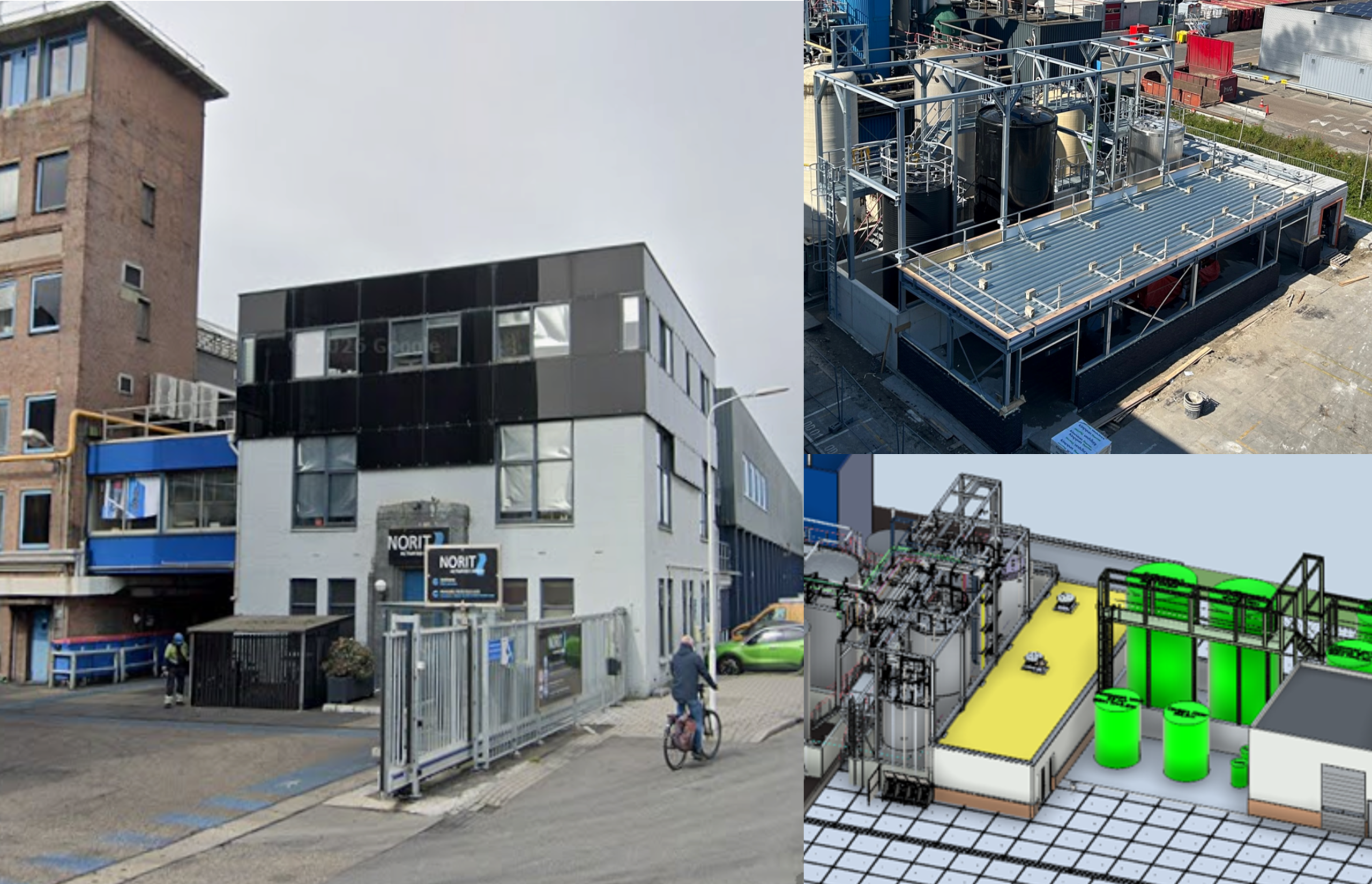
Result: First CAPEX phase delivered, including a new tank farm and pump room
Not every Moving Industries project involves the physical relocation of a production facility. Sometimes, the movement takes place within the factory itself.
At Norit in Zaandam, the project focused on a strategic transition: assessing whether key raw materials in an existing production process could be replaced with more environmentally friendly alternatives. Although this began as a technical question, it had implications for the production process, installations, product quality, safety, environmental performance, investment and customer acceptance.
The factory remained in place, but almost every other aspect had to evolve. Norit led the strategic and operational transition, defining the technical requirements and making the key operational decisions. Moving Industries supported the project management by coordinating the multidisciplinary workstreams, making dependencies visible and translating agreed decisions into a structured project approach.
Why were different raw materials needed?
The existing raw materials had formed part of the production process for many years. Technical performance, however, is not the only measure of whether a raw material remains suitable for the future. Environmental standards, occupational safety, emissions, availability and cost are becoming increasingly important.
Norit therefore initiated an assessment of whether the existing raw materials could be replaced with more environmentally friendly alternatives. The new raw materials had to perform successfully in product testing and be processed reliably on an industrial scale. At the same time, product quality, safety and production continuity had to be maintained.
What initially appeared to be a technical raw material question quickly developed into an integrated transformation project for the entire production site.
Project management in an operational factory
The transition took place within an existing factory that remained in operation throughout the project. Unlike a new production facility, space, connections, maintenance windows and operating procedures were largely predetermined. New installations, process changes and working methods therefore had to be integrated into the existing environment while maintaining safety and production continuity.
The project consisted of several parallel workstreams, including product validation, process development, engineering, safety studies, environmental assessments, investment preparation and customer acceptance. The practical knowledge of Norit’s operations, engineering, safety, quality and commercial teams was essential for defining requirements and ensuring that the proposed changes would work in practice.
In projects of this nature, project management extends far beyond monitoring schedules and budgets. Moving Industries created alignment between the workstreams, ensured that the right specialists worked together at the right time and supported structured decision-making based on the available information.
A phased approach
As product testing, process evaluations and engineering progressed, a clearer understanding emerged of the technical possibilities and the implications for the organisation and its customers. Although the development produced positive results, different applications and customers required different transition timelines. A phased implementation was therefore selected instead of a single large-scale changeover.
This allowed technical progress, operational experience and customer acceptance to develop in parallel. Each phase generated new insights for the next step, while investments could be linked to demonstrated progress and risks remained manageable.
What did the project deliver?
The project demonstrated the technical feasibility of the new raw materials and successfully completed the initial product validations. The implications for production processes, installations and operations were systematically assessed and translated into engineering activities, investment proposals and a realistic implementation route. Additional applications and customer transitions were planned through phased validation and acceptance.
Most importantly, the first project phase went beyond studies and plans. It included the delivery of a substantial CAPEX project: a new tank farm and pump room were constructed, turning the proposed process changes into tangible modifications to the production facility. This was achieved through the combined efforts of Norit’s project and operational teams, Moving Industries and the engineering and construction partners involved.
With the first phase completed, Norit has a validated technical foundation, new production infrastructure, a phased implementation strategy and a clearer understanding of the next steps required for a potential further rollout.
The key lesson
Replacing raw materials in an existing production process is rarely an isolated technical modification. The real challenge lies in managing all the consequences that follow from it.
A successful raw material transition requires a project approach that connects engineering, operations and business from the outset, while allowing decisions to be adjusted as new insights emerge. This case demonstrates how a manufacturer and an external project management partner can combine operational knowledge, technical expertise and structured coordination to manage complex change within an existing production environment.
Is your organisation facing a raw material transition, a major process change or another complex transformation within an existing manufacturing environment? Moving Industries connects engineering, operations and business to keep the change manageable from business case through to implementation.